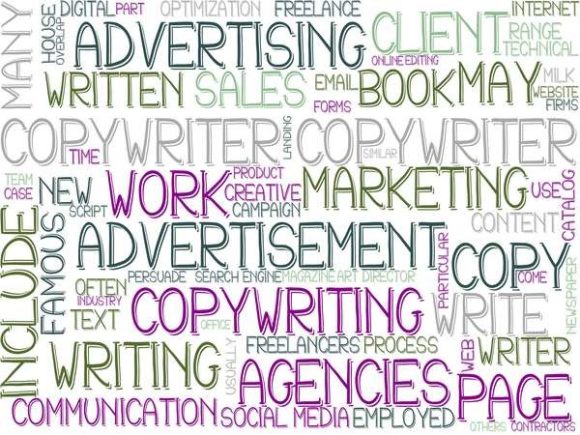
Copywriter Wordcloud Crafting
Imagine turning a client’s core message, a book’s central theme, or your brand’s voice into a visual that pulses with meaning—not just decoration, but distilled intent. That’s what Copywriter Wordcloud Crafting is: the intentional, strategic design of word clouds where language and layout work together to communicate, resonate, and engage.
It’s not about dumping keywords into a generator and calling it done. It’s about selecting words with purpose—weighting them by relevance, rhythm, and emotional resonance—then shaping their arrangement to guide the eye, reinforce hierarchy, and reflect tone. A well-crafted word cloud can anchor a presentation slide, breathe life into a classroom poster, or become the focal point of a boutique product label.
Why This Matters—Differently—for Different People
For educators and trainers, a word cloud isn’t a gimmick—it’s a cognitive tool. When students co-create a cloud from discussion notes or reading responses, they’re identifying patterns, negotiating meaning, and visually organizing ideas. A science teacher might use Copywriter Wordcloud Crafting to map vocabulary from a climate unit—not just listing terms, but sizing “carbon” larger than “mitigation” to reflect emphasis in current discourse. The priority here is clarity, pedagogical alignment, and accessibility—not flashy effects.
Freelance designers and marketers often juggle tight deadlines and diverse clients. For them, Copywriter Wordcloud Crafting is about speed *and* polish: generating a custom cloud for a social media campaign in under 10 minutes, then refining font pairings, spacing, and color contrast to match brand guidelines. They value flexibility (exporting transparent PNGs, SVGs for web use), reliability across devices, and clean integration into Canva, Figma, or Adobe workflows. A poorly rendered cloud that pixelates on an Instagram Story or misaligns in a print-ready PDF? That’s a credibility risk.
Small business owners and makers—think ceramicists, indie publishers, or local café owners—use word clouds to humanize their messaging. A handmade soap brand might craft a cloud from customer reviews (“calming,” “lavender,” “gentle,” “morning ritual”) and print it on packaging or shop signage. Here, authenticity matters more than perfection. They need tools that let them adjust word size manually, swap fonts without licensing headaches, and preview how the cloud looks on matte paper versus glossy sticker stock.
Writers, editors, and content strategists approach word clouds as diagnostic lenses. Before finalizing a website homepage, they might generate a cloud from the draft copy—not to publish it, but to spot overused phrases (“innovative,” “seamless,” “empower”), identify missing themes, or test whether the intended audience language appears at all. For them, Copywriter Wordcloud Crafting supports reflection, not just output. They care about editable source files, word exclusions (like “the,” “and,” “of”), and the ability to compare versions side-by-side.
What Actually Changes Based on Your Goals
Not every project needs the same kind of word cloud—or the same level of craft.
- Beginners benefit most from intuitive interfaces: drag-and-drop word lists, real-time previews, and presets labeled by use case (“Invitation,” “Classroom Poster,” “Instagram Graphic”). They don’t need advanced typography controls yet—but they do need clear feedback when a font won’t render correctly at small sizes.
- Experienced creators look for granular control: kerning adjustments, manual word positioning, support for OpenType features, and the ability to layer clouds with vector illustrations or photos. They’ll spend time fine-tuning a single cloud for a book cover because it sets the entire visual tone.
- Hobbyists and scrapbookers prioritize fun and variety—playful fonts, texture overlays, and easy export to cut files (for Cricut or Silhouette). They might craft a cloud from wedding vows and turn it into a foil-pressed card or a fabric transfer for a keepsake pillow.
- UX and web designers evaluate how a word cloud performs functionally: Does it scale responsively? Is text still legible when reduced to mobile width? Can screen readers interpret the word hierarchy meaningfully (e.g., via ARIA labels or semantic HTML if embedded)? Accessibility isn’t optional—it’s part of the craft.
Real Projects, Real Decisions
A freelance blogger promoting a new e-book on mindful productivity might generate a cloud from chapter titles and key takeaways—then use it as the hero image on her sales page. She’d prioritize clean lines, high contrast for readability, and fast loading (so she exports as optimized SVG, not a heavy JPG).
A university communications team designing a recruitment brochure for first-gen students could crowdsource phrases from student interviews (“first in my family,” “supportive,” “library hours,” “imposter syndrome”) and craft a cloud that feels warm, grounded, and honest—not corporate or overwhelming. Their focus would be inclusive language representation and thoughtful spacing so no word feels isolated or diminished.
A textile designer exploring pattern ideas might treat a word cloud as a sketch: using overlapping, semi-transparent words like “wander,” “coastline,” “salt,” and “driftwood” as a base layer beneath hand-drawn waves. Here, the cloud isn’t the final product—it’s a mood board translated into type, guiding color palette and line weight choices.
Does This Fit Your Next Step?
Ask yourself:
- Do you need a quick visual accent—or a carefully considered element that carries meaning on its own?
- Will this live digitally, in print, or across both? (Resolution, color mode, and file format needs shift accordingly.)
- Is consistency important? If you’re building a brand system, your word cloud should feel like a natural extension of your logo, typography, and imagery—not an afterthought.
- How much time and technical comfort do you have? Some tools require learning curves; others offer templates you can adapt in minutes.
Copywriter Wordcloud Crafting sits at the intersection of language, design, and intention. It’s not about filling space—it’s about honoring the weight of words, honoring the people who read them, and honoring the context in which they appear. Whether you’re drafting a birthday invitation, designing a conference program, or developing curriculum materials, the craft lies in choosing what to say—and how to let those words be seen, remembered, and felt.